
In 2021, the American National Standards Institute (ANSI) released updated requirements for workplace first aid kits through the ANSI/ISEA Z308.1 standard. These guidelines help employers determine which first aid supplies should be available based on the hazards present in the workplace.
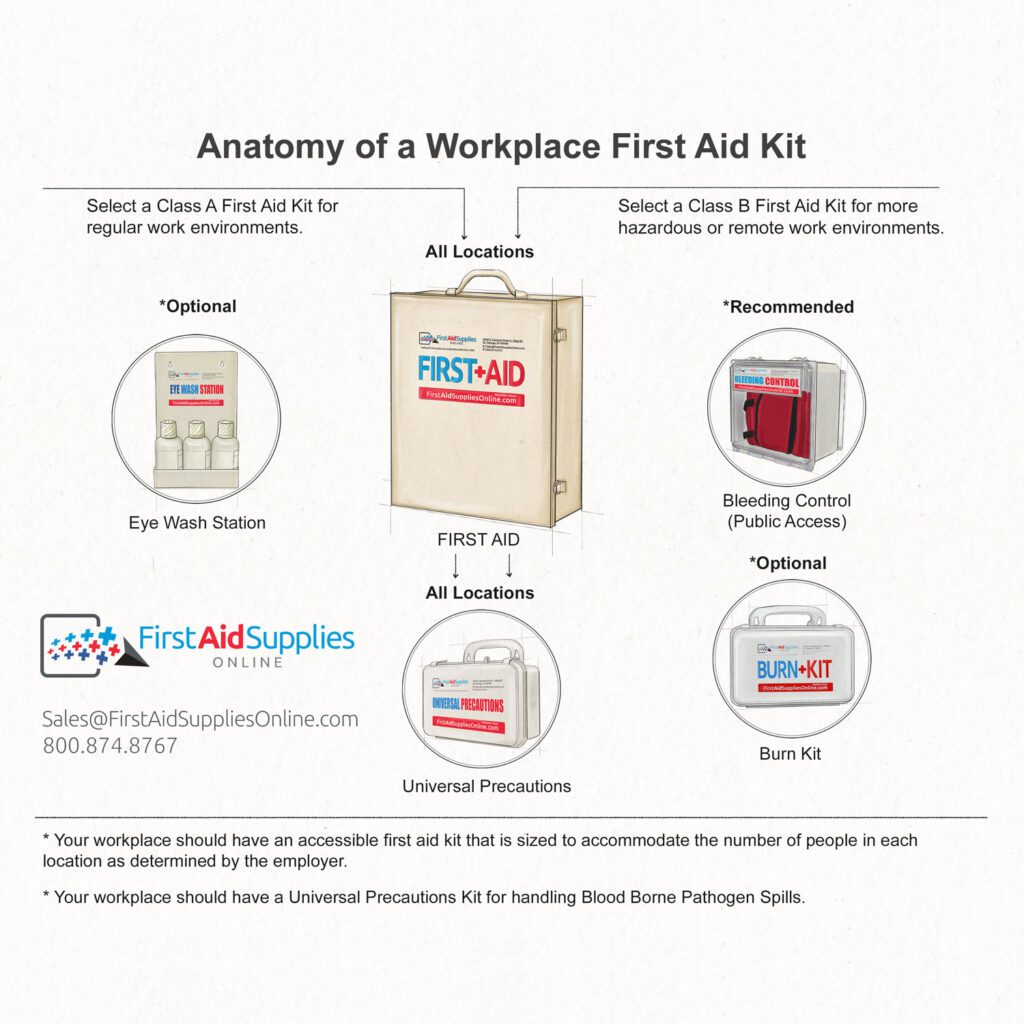
ANSI divides workplace first aid kits into two categories: Class A and Class B. While Class A kits are intended for common workplace injuries, Class B kits include additional supplies and larger quantities of key items to help address more serious injuries that may occur in higher-risk environments.
What goes into a Class B first aid kit? How do you know if Class B is right for your workplace? Read on to learn more about ANSI Class B first aid kits and where they are commonly used.
The Primary Differences Between Class A and Class B First Aid Kits
Both Class A and Class B first aid kits are designed to help employers provide prompt treatment for workplace injuries. The primary difference is the type and quantity of supplies included.
Class A first aid kits are intended for common workplace injuries such as minor cuts, scrapes, and burns. They are generally recommended for lower-risk environments such as offices, retail stores, and similar workplaces.
Class B first aid kits contain all of the supplies found in a Class A kit but in larger quantities. They also include additional items intended to help treat more serious injuries that may occur in higher-risk workplaces.
Examples of supplies commonly found in Class B kits include splints, tourniquets, additional trauma dressings, and larger quantities of first aid essentials. Want more detail on stop-bleeding products? See our full breakdown on why every first aid kit should include stop bleeding products.
What Supplies Go Into a Class B First Aid Kit?
Chances are, you’ve been relying on a first aid kit that is more comparable to Class A than Class B. To get a better sense of what supplies you still need, let’s take a closer look at what goes in a Class B first aid kit.
Supplies and quantities are as follows:
- 50 adhesive bandages (1 x 3″ each)
- 2 rolls of adhesive tape (2.5 yards each)
- 25 antibiotic applications
- 50 antiseptic wipes
- 1 breathing barrier
- 2 burn dressings
- 25 burn treatments
- 2 cold packs
- 2 eye coverings
- 4 fluid ounces eye and skin wash
- 1 first aid guide
- 25 hand sanitizer wipes or packets (1/32 ounces each)
- 4 pairs of medical gloves
- 2 2-inch roller bandages
- 1 4-inch roller bandage
- 1 pair of scissors
- 1 24″ splint
- 4 sterile pads (3 x 3″ each)
- 1 tourniquet
- 4 trauma pads (5 x 9″ each)
- 2 triangular bandages (40 x 40 56″ each)
Class A first aid kits require these same supplies (except the 4-inch roller bandages, splint, and tourniquet). However, the Class B first aid kits require larger quantities of almost all supplies. Read our blog on the Basics of Class A first aid kits to learn more about the difference between class A and class B first aid kits.
Who Should Use a Class B First Aid Kit?
OSHA requires employers to make first aid supplies readily available when medical facilities are not reasonably accessible to employees. While OSHA does not provide a detailed first aid kit checklist, many employers rely on ANSI recommendations when selecting workplace first aid kits.
Class B first aid kits are generally recommended for workplaces where employees face a higher risk of injury. Examples may include:
- Construction sites
- Warehouses
- Manufacturing facilities
- Transportation operations
- Utility and maintenance crews
- Industrial workplaces
Employers should evaluate the hazards present in their workplace when determining which first aid kit classification is most appropriate.
Conducting a Workplace Risk Assessment
Choosing between a Class A and Class B first aid kit often starts with a workplace risk assessment.
Consider factors such as:
- The type of work being performed
- Common workplace hazards
- The number of employees
- Previous injury history
- The distance to emergency medical services
Reviewing OSHA injury data and industry-specific safety information can also help employers identify the types of injuries most likely to occur in their workplace.
When necessary, employers may wish to consult a safety professional or medical provider for guidance on workplace first aid preparedness.
Additional Requirements
In addition to OSHA and ANSI recommendations, employers should be aware of any state or local regulations that may apply to their workplace.
Certain industries or jurisdictions may require additional first aid supplies beyond the minimum recommendations found in ANSI/ISEA Z308.1.
Some employers also choose to customize their first aid kits to address specific workplace hazards, environmental conditions, or job site requirements.
Where Can You Get Supplies and Refills for First Aid Kits?
Keeping first aid kits properly stocked is an important part of workplace safety. In addition to complete Class B first aid kits, many businesses purchase refill kits and replacement supplies to maintain compliance and preparedness.
Common replacement items include bandages, antiseptics, burn treatments, eye wash, gloves, trauma dressings, and other frequently used supplies.
Regular inspections can help ensure that supplies remain stocked, accessible, and ready for use when needed.
Stay Up To Date on Workplace First Aid Kits
Workplace safety standards continue to evolve as new hazards, products, and best practices emerge. Staying informed about ANSI recommendations can help employers maintain a safer work environment and ensure their first aid kits remain properly stocked.
Whether you are evaluating your current first aid program or selecting a new workplace first aid kit, understanding the differences between Class A and Class B kits is an important step toward workplace preparedness.
Still not sure? Our injury-based guide can help you decide.