
“Best first aid kit” lists are designed for consumers, not workplaces. They ignore OSHA/ANSI requirements, employee count, hazard levels, and ongoing refill needs.
In workplace environments, first aid is not a one-time purchase. It is an ongoing system that must remain stocked, standardized, and compliant across time and locations.
Most online “best first aid kit” articles compare small travel kits, home emergency bags, or general-purpose kits based on price, reviews, or convenience.
Definition: Self-Stock First Aid Kits
Self-stock first aid kits are workplace safety systems where organizations internally manage, refill, and maintain standardized first aid supplies instead of relying on external service providers or consumer-style kit recommendations.
This approach is typically used by safety managers responsible for maintaining compliance across multiple facilities while reducing reliance on third-party service schedules.
Workplace First Aid Is a Managed System
Workplace first aid is not a single product decision. It is an ongoing operational responsibility.
Safety managers typically must manage:
- OSHA/ANSI alignment
- Employee coverage requirements
- Multiple job sites or departments
- Supply expiration and replacement
- Inventory consistency
- Inspection readiness
- Ongoing cost control
Most consumer-focused “best kit” lists do not account for these requirements.
A kit that performs well in a consumer setting can quickly become inadequate in a workplace where usage, compliance, and consistency matter.
Why Safety Managers Move Toward Self-Stock Programs
Many organizations start with fully managed first aid service programs because they appear simple.
Over time, operational limitations often become clear.
Common challenges include:
- Recurring service costs that are difficult to scale
- Inconsistent restocking between visits
- Replacement of unused or unnecessary supplies
- Limited visibility into inventory usage
- Different products across locations
- Difficulty standardizing kits company-wide
Self-stock programs shift control back to the organization.
Instead of relying on external service schedules, safety teams manage replenishment internally using standardized kits and refill systems.
What Actually Matters in Workplace First Aid Programs
Workplace first aid systems should be evaluated based on operational performance, not product popularity.
| Operational Factor | Why It Matters |
|---|---|
| Standardized Supplies | Ensures consistency across all kits and locations |
| Refill Availability | Supports ongoing compliance and reduces downtime |
| ANSI Classification | Aligns kit contents with workplace risk levels |
| Inventory Visibility | Helps control usage and prevent shortages |
| Multi-Location Consistency | Reduces confusion across facilities or job sites |
| Organized Layouts | Improves response speed during emergencies |
| Scalability | Allows programs to expand as operations grow |
Why Generic “Best Kit” Lists Fail Over Time
The biggest gap in consumer-focused recommendations is long-term maintenance.
Workplace kits are not static. Supplies are used, expire, and must be replaced consistently.
Without a structured refill system, workplaces often develop:
- Partially stocked kits
- Expired or outdated supplies
- Inconsistent product types between locations
- Disorganized or incomplete cabinets
This becomes more complex in larger operations such as warehouses, manufacturing facilities, fleets, and multi-site businesses.
A Better Approach to Workplace First Aid
Effective workplace first aid programs are built around system control rather than one-time product selection.
Key elements include:
- Standardized kits across all locations
- Simplified refill processes
- Clear inventory management
- Scalable supply systems
- Long-term maintenance planning
For many safety managers, self-stock programs provide greater control over compliance, consistency, and cost management while reducing reliance on external service schedules.
Related Workplace Safety Resources
- ANSI Compliance Guide – Understand ANSI Z308.1 requirements for workplace first aid.
- OSHA’s Role in First Aid Kit Compliance – Learn OSHA regulations for your workplace.
- Basics of Class A First Aid Kits – For low-risk environments like offices and small businesses.
- What Are Class B First Aid Kits? – For higher-risk workplaces with expanded needs.
Recommended Self-Stock Solutions
Class A Self-Stock First Aid Kits
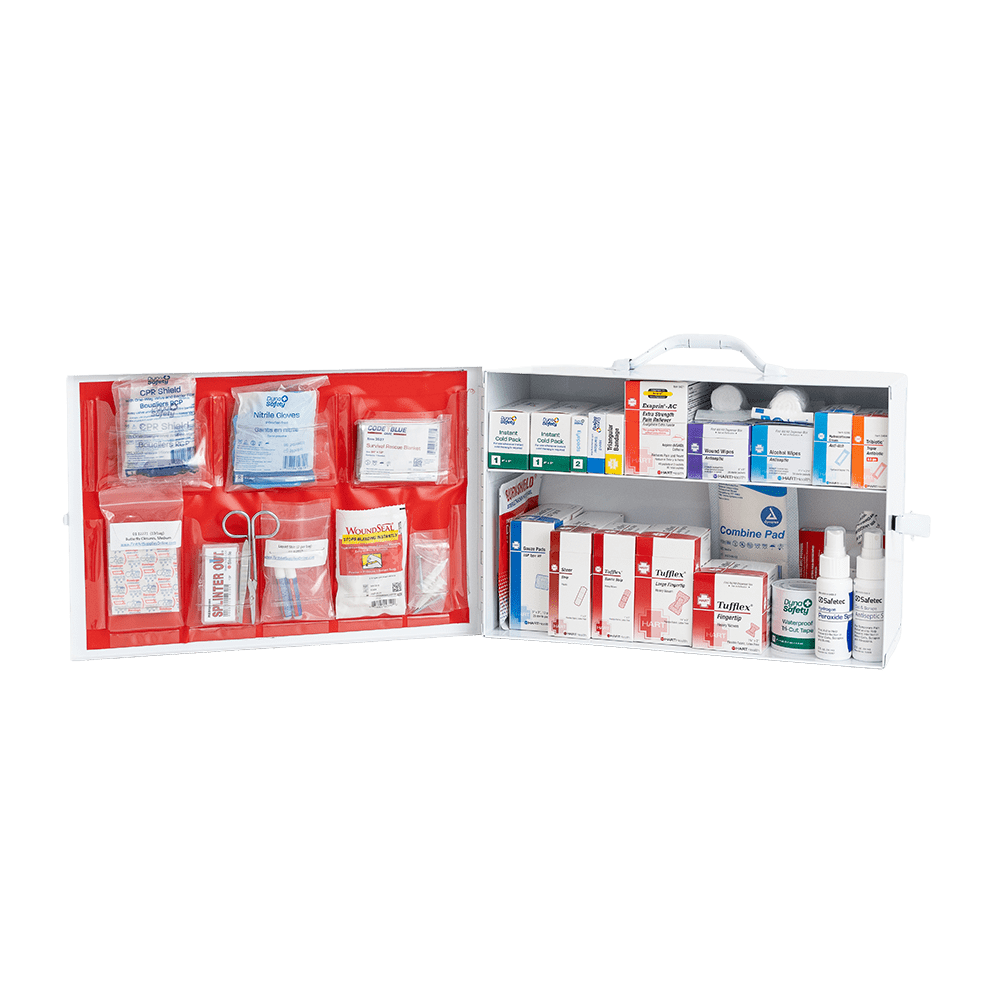
For offices and low-risk environments:
Class B Self-Stock First Aid Kits
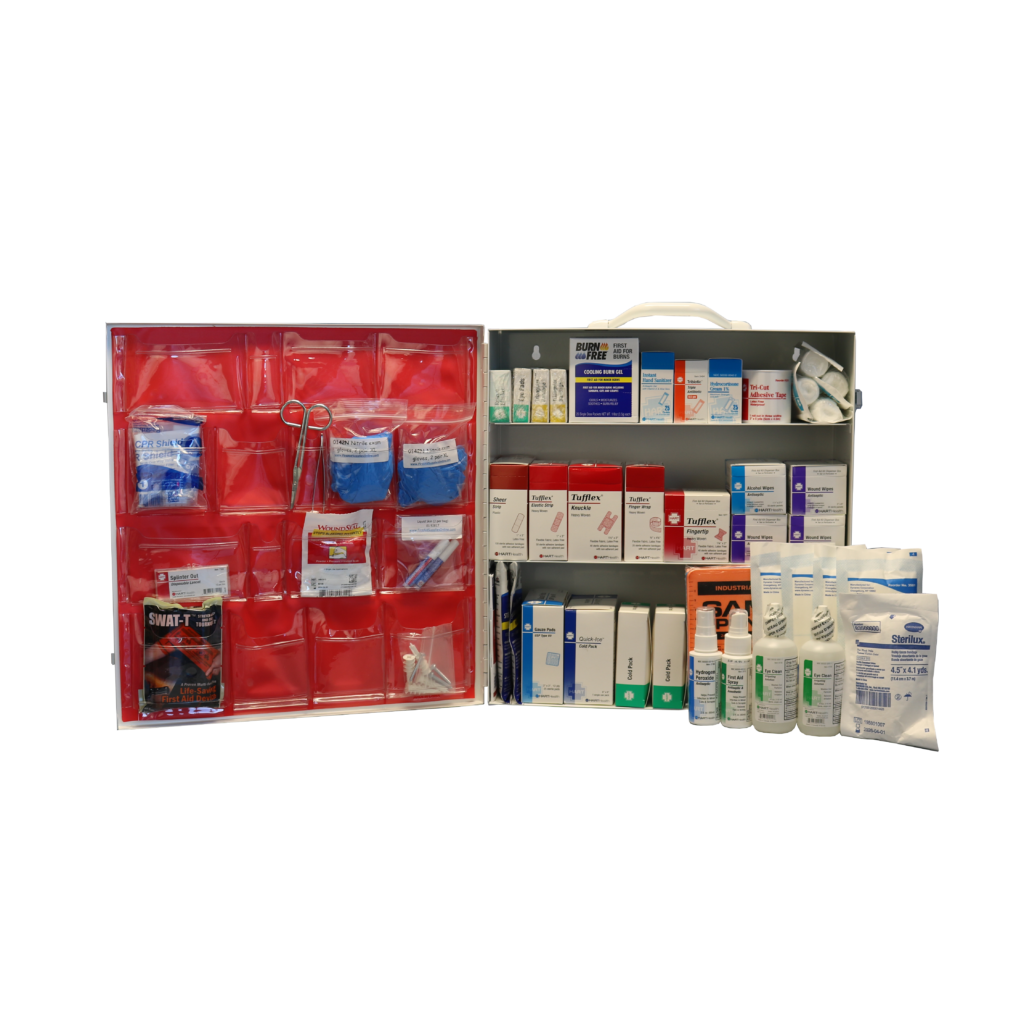
For warehouses and Industrial Facilities:
For maintaining compliance and consistency over time
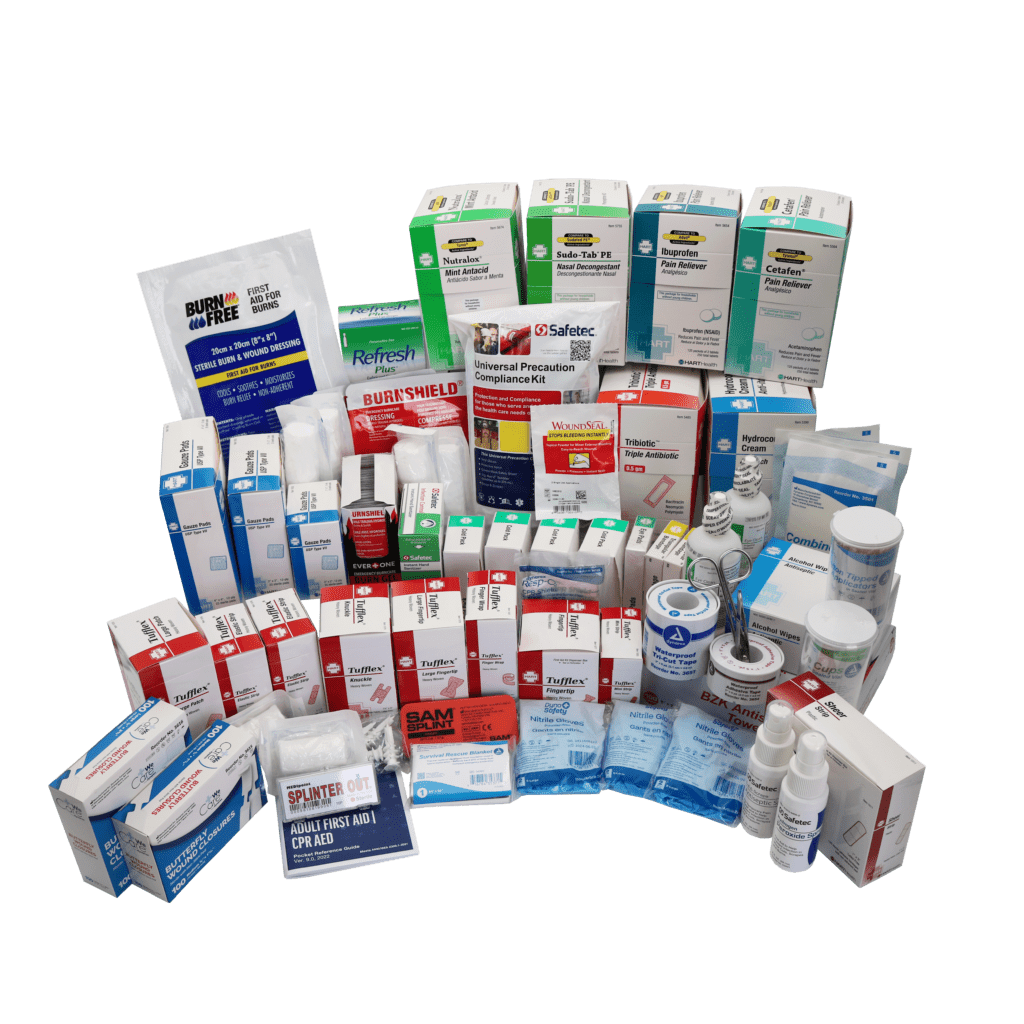
For Self-stock Class A and B first aid kit refills
Rugged Portable First Aid Kits
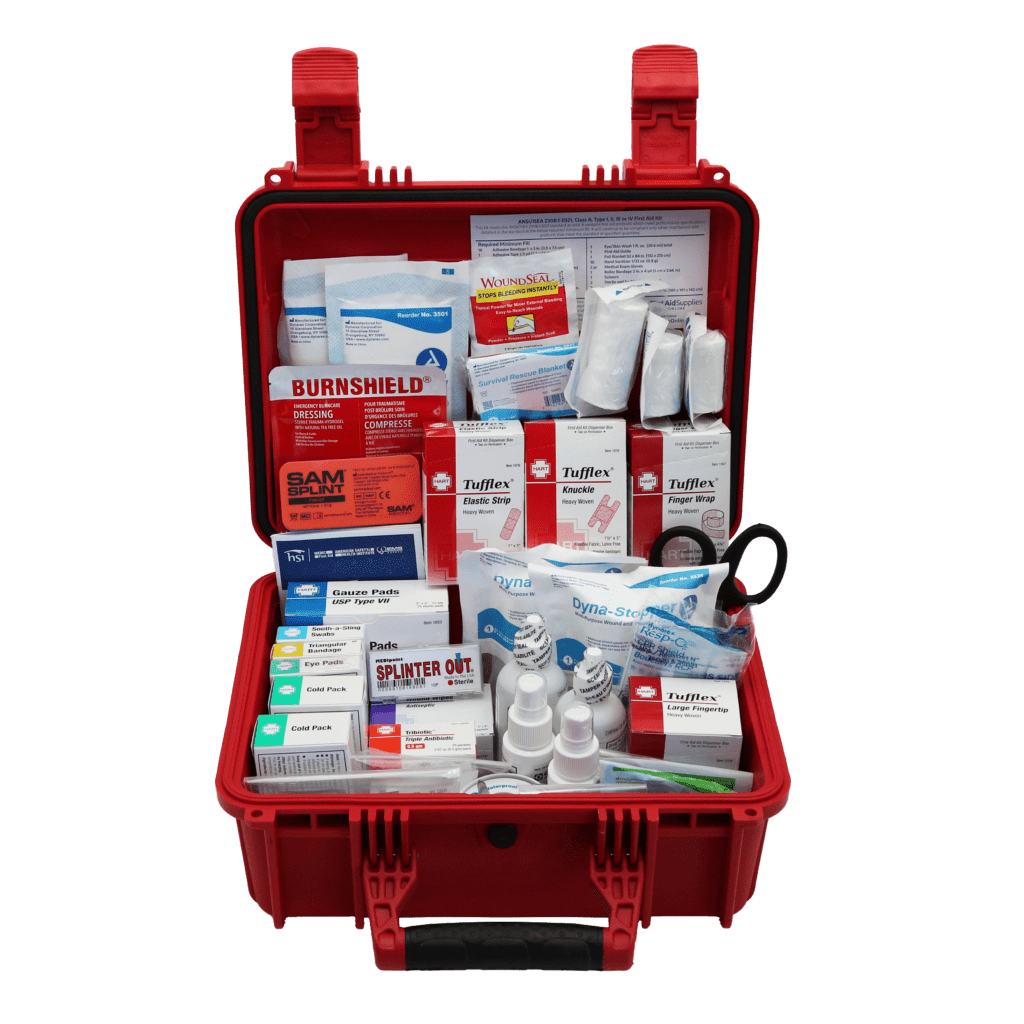
For vehicles, fleets, and mobile or high-durability environments
Bottom Line
Workplace first aid is not about choosing the “best kit” on a list. It is about building a repeatable, standardized system that stays compliant and fully stocked over time.
Self-stock programs give safety managers more control, consistency, and operational clarity than traditional consumer-focused recommendations or service-based models.